


Proclamation Prayer for the Dead
Heavenly Father,
We come before You with faith and reverence, lifting up to You the souls of our departed loved ones. You are the God of all comfort, the Lord of life and death, and the source of our hope in the resurrection. We stand on the promises of Your Word and proclaim Your love and mercy for those who have gone before us. May their souls rest in Your eternal light and peace.
“Jesus said to her, ‘I am the resurrection and the life. The one who believes in me will live, even though they die; and whoever lives by believing in me will never die'” (John 11:25-26).
Lord Jesus, we declare Your promise of eternal life. You are the resurrection and the life, and we trust in Your Word that all who believe in You will live forever in Your presence. We entrust our loved ones into Your hands, confident in the hope of the resurrection. We entrust our loved ones into Your hands, confident in the hope of the resurrection. As we offer this prayer for the dead, we hold fast to the belief that our intercession reaches beyond the veil, bringing peace and grace to their souls through Your mercy.
“The souls of the righteous are in the hand of God, and no torment will ever touch them” (Wisdom 3:1).
Father, we proclaim that the souls of the faithful departed are safe in Your loving hands. They are free from suffering and torment, embraced by Your eternal love and care. We find comfort in knowing that nothing can separate them from Your mercy.
“For this God is our God forever and ever; he will be our guide even to the end” (Psalm 48:14).
Lord, we declare that You are the eternal guide for all souls, both in this life and beyond. We ask You to guide the departed into the fullness of Your kingdom, where they may behold Your face and rejoice forever in Your glory.
“And God will wipe away every tear from their eyes; there will be no more death, nor sorrow, nor crying. There shall be no more pain, for the former things have passed away” (Revelation 21:4).
Heavenly Father, we proclaim Your promise of a new creation where death and suffering are no more. We hold fast to the assurance that our loved ones now dwell in a place where every tear is wiped away, and they experience the fullness of Your peace and joy.
“Blessed are the dead who die in the Lord from now on. ‘Yes,’ says the Spirit, ‘they will rest from their labor, for their deeds will follow them’” (Revelation 14:13).
Lord, we declare the blessing of eternal rest upon those who have died in faith. May their good works and acts of love follow them into eternity, where they find rest in Your presence and everlasting reward.
“For we believe that Jesus died and rose again, and so we believe that God will bring with Jesus those who have fallen asleep in him” (1 Thessalonians 4:14).
Father, we proclaim our faith in the death and resurrection of Jesus Christ. Just as Christ rose from the dead, we trust that You will bring the departed who have fallen asleep in Him into the fullness of Your heavenly kingdom.
“The Lord is my shepherd; I shall not want. He makes me lie down in green pastures. He leads me beside still waters. He restores my soul” (Psalm 23:1-3).
Lord, we declare Your loving care over the souls of our loved ones. You are their Shepherd, leading them to eternal rest in green pastures and still waters. We trust in Your promise to restore their souls and grant them everlasting peace.
“Eternal rest grant unto them, O Lord, and let perpetual light shine upon them” (Traditional Prayer for the Dead).
Father, we echo this prayer of the Church, asking You to grant eternal rest to our loved ones. May Your perpetual light shine upon them, and may they rest in peace forever in Your presence.
Heavenly Father,
We thank You for the promises of Your Word and the hope of eternal life. We entrust our departed loved ones to Your mercy and care, trusting that they now rest in Your glorious presence. May we find comfort in Your love and strength in the assurance of the resurrection. Through Christ, our Lord. Amen.
Understanding Catholic Prayer For The Dead
Catholic prayers for the dead are deeply woven into our faith and traditions, guided by scripture and early Christian practices. These prayers, often inspired by Bible verses, reflect our belief in the communion of saints and the hope for eternal life.
These prayers are also an expression of our unity in Christ’s Body, affirming the connection with the faithful and the church as a whole. As we pray, we may also lift up intentional prayer points for the church, asking God to strengthen our shared faith and bring healing to the Body of Christ.
One prominent reference is from 2 Maccabees 12:46: “It is hence a holy and wholesome thought to pray for the dead, that they may be loosed from sins.” This verse reminds us that through prayer, we seek God’s mercy for the departed. In our prayers, we also draw from Romans 14:8, “If we live, we live for the Lord; and if we die, we die for the Lord,” affirming the connection between earthly life and eternal union with God.
The Bible also inspires our trust in God’s justice and mercy. For instance, using Psalm 23:4, “Even though I walk through the valley of the shadow of death, I will fear no evil, for you are with me,” brings comfort as we intercede for the dead. These verses align with our prayers, expressing hope and trust in God’s salvation.
Praying the Bible allows us to personalize these scriptural truths, incorporating them into prayers during Masses, rosaries, or private devotion. By doing so, we uphold these sacred traditions while connecting spiritually with both the departed and God.
The Importance Of Praying For The Departed
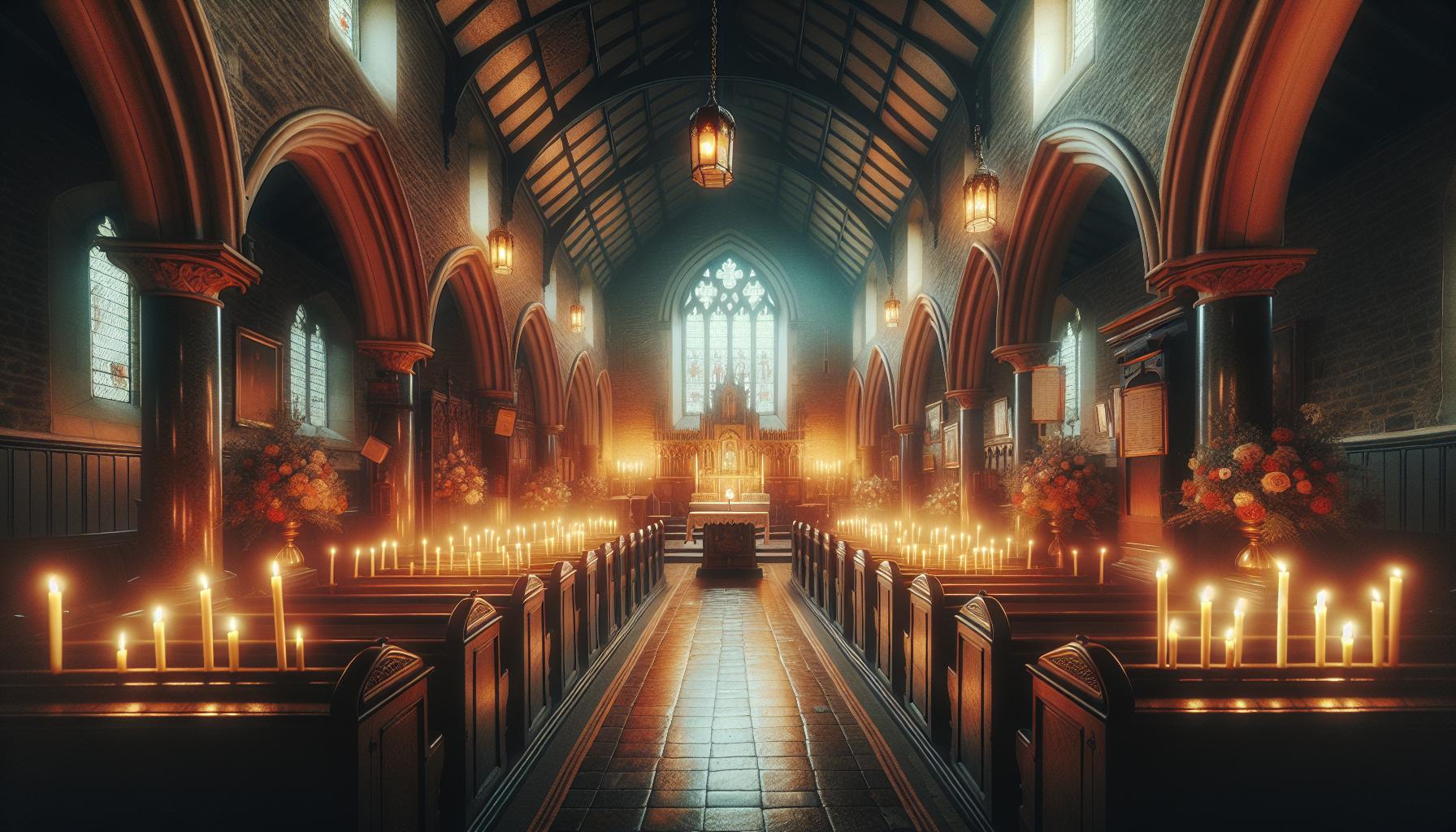
Praying for the dead holds deep meaning in the Catholic faith. It connects us spiritually with the departed while reflecting our hope in eternal life.
Biblical Foundations Of Catholic Prayers For The Dead
Scripture emphasizes the sanctity of praying for the dead. In 2 Maccabees 12:46, we are reminded of the value of interceding for those who have passed: “It is hence a holy and wholesome thought to pray for the dead, that they may be loosed from sins.” This verse highlights the connection between prayer and the purification of souls.
Romans 14:8 reinforces the unity between earthly life and eternity: “If we live, we live for the Lord; and if we die, we die for the Lord. So, whether we live or die, we belong to the Lord.” Incorporating this truth into our prayers fosters trust in God’s eternal care.
Psalm 23:4, “Even though I walk through the valley of the shadow of death, I will fear no evil, for you are with me,” is another powerful verse to include in prayer. Its reassurance reminds us of God’s presence, offering comfort during mourning.
Praying using scriptural language strengthens our faith and aligns our intentions with divine teachings. By rephrasing verses like these in our prayers, we maintain their original meaning while making the words deeply personal.
Tradition And Church Teachings
The tradition of praying for the dead is rooted in Church teachings and practices. The Catholic doctrine of purgatory, outlined in the Catechism of the Catholic Church (CCC 1030–1032), teaches that souls must undergo purification to achieve the holiness required for heaven. Our prayers and Masses play a role in this process, assisting departed souls.
The Church also highlights the communion of saints, which unites all members of Christ’s Body, both living and deceased. Through prayer, we express this spiritual bond and show love for the dead. Practical prayers, such as the Rosary and Requiem Mass, reflect this connection.
Including Bible-based prayers further enriches this tradition. For instance, Psalm 130:1-2, “Out of the depths I cry to you, Lord; Lord, hear my voice,” can be adapted in a prayer for mercy on a loved one in purgatory. By intertwining scripture with Church practices, we sustain a profound way of honoring the dead.
Common Catholic Prayers For The Dead
Catholic prayers for the dead carry deep significance, connecting us to our faith and comforting us during grief. These prayers reflect our hope for eternal life while honoring biblical truths. Whether reciting the Eternal Rest prayer or a spontaneous petition, offering a heartfelt Catholic prayer for the dead draws us closer to God’s promise of mercy and reminds us that love never ends, even after death.
The Eternal Rest Prayer
The Eternal Rest prayer is widely recited to commend the souls of the faithful departed to God’s mercy. Its words reflect eternal hope and light drawn from biblical inspiration, like Revelation 14:13, which proclaims, “Blessed are the dead who die in the Lord.”
English Version:
Eternal rest grant unto them, O Lord,
and let perpetual light shine upon them.
May the souls of all the faithful departed,
through the mercy of God, rest in peace.
Amen.
Latin Version:
Requiem aeternam dona eis, Domine.
Et lux perpetua luceat eis.
Fidelium animae, per misericordiam Dei,
requiescant in pace.
This prayer often appears at funerals, memorial services, and during Requiem Mass, reflecting the Church’s tradition of interceding for souls in purgatory.
The Rosary For The Deceased
When praying the Rosary for the dead, we focus on the Glorious Mysteries, recalling Christ’s resurrection and our hope of eternal life. Biblical verses like John 11:25, where Jesus says, “I am the Resurrection and the Life,” remind us of His promise to the faithful. Each decade can include intentions for the purification and peace of the departed.
For example, during the first Glorious Mystery (The Resurrection), we can pray:
“Lord, as we meditate on Your victory over death, grant eternal rest to the souls of our departed loved ones. May they rejoice in the peace of Your kingdom (John 11:25). Amen.”
Using Bible verses like these enriches the experience while keeping Scripture at the heart of the prayer.
The Prayer Of Commendation
The Prayer of Commendation entrusts the departed to God’s care at the moment of passing. Inspired by Luke 23:46, where Jesus commends His spirit to the Father, this prayer echoes trust in God’s infinite mercy.
Prayer Example:
“Go forth, O Christian soul, from this world, in the name of God the almighty Father, who created you, in the name of Jesus Christ, Son of the living God, who suffered for you, in the name of the Holy Spirit, who was poured out upon you. May you live in peace this day, and may your home be with God in Zion.”
This prayer assures us that our loved ones are in God’s hands, embraced by His eternal love. Many families find immense comfort in these words during times of loss.
The Role Of Masses And Special Devotions
In the Catholic tradition, prayers for the dead hold profound significance, often expressed through Masses and special devotions. These practices aim to honor the departed, offer them spiritual assistance, and strengthen our faith in God’s mercy.
The Requiem Mass
Requiem Masses are central to our prayers for the dead. Derived from the Latin “Requiem aeternam” (Eternal rest), these Masses focus entirely on the souls for whom we pray. The liturgy excludes joyful elements like the Gloria and Alleluia, reflecting a solemn tone, and the priests wear black vestments symbolizing mourning. During the Requiem, we invoke eternal rest through prayers inspired by Scripture, such as Psalm 130:1-2: “Out of the depths, I cry to you, Lord; Lord, hear my voice!” This prayer emphasizes seeking God’s mercy for the deceased.
All Souls’ Day And Its Significance
All Souls’ Day serves as a dedicated time for communal prayer for all departed souls, particularly those in Purgatory. This annual observance reminds us of our bond through the communion of saints. By praying verses like 2 Maccabees 12:46, “Hence he made atonement for the dead, so that they might be delivered from their sin,” we express hope in God’s purification of their souls. Special devotions on this day include lighting candles, offering the Holy Sacrifice of the Mass, and reflecting on Jesus’ promise in John 11:25: “I am the resurrection and the life; whoever believes in me will live, even though they die.” These practices encourage us to grow in faith while extending support to the faithful departed.
Personal And Community Practices
Prayers for the dead hold significant importance in Catholic tradition, forming a spiritual bond between the living and deceased. These practices bring comfort and reinforce our faith in eternal life.
Praying For Loved Ones At Home
Praying at home provides an intimate way to honor our departed loved ones. When gathered around the body of the deceased, we can pray together by reciting scriptures and making the Sign of the Cross. For example, reading Christ’s words from Matthew 11:28, “Come to me, all you who labor and are overburdened, and I will give you rest,” offers solace and strength through God’s promise.
Sprinkling the body with holy water while reciting prayers, like “Into your hands, O Lord, we humbly entrust our brother/sister N.,” calls upon God’s mercy to grant the deceased eternal rest. Adding daily prayers for the departed within meal blessings or personal devotions strengthens our commitment to remembering them, as reflected in 2 Maccabees 12:46, which reminds us it’s holy and pious to pray for those who have passed.
Parish And Community Gatherings
Community gatherings provide opportunities for united prayer, amplifying our connection to the departed. Parish activities, like attending Requiem Masses or participating in All Souls’ Day devotions, allow us to collectively pray for the dead. These gatherings often incorporate scripture-based prayers, including John 11:25-26: “I am the resurrection and the life. Whoever believes in me will live, even though they die.”
Rosary groups or community-led prayer services enrich the spiritual experience, particularly by meditating on the Glorious Mysteries or integrating Bible passages to seek divine mercy. These collaborative acts emphasize the communal faith and hope in God’s eternal care for souls.
Key Takeaways
- Catholic prayers for the dead are deeply rooted in scripture and tradition, symbolizing love, hope, and a spiritual connection with departed souls.
- Key Bible verses, such as 2 Maccabees 12:46 and Psalm 23:4, emphasize the importance of praying for the purification of souls and trusting in God’s mercy.
- Traditional prayers like the Eternal Rest Prayer, the Rosary for the deceased, and the Prayer of Commendation offer comforting ways to intercede for the dead.
- Special practices, including Requiem Masses and All Souls’ Day devotions, highlight communal prayer and faith in eternal life through Christ.
- Personal and community prayers, whether at home or within parish gatherings, foster solace and express the ongoing spiritual bond between the living and the departed. Daily devotionals and evening rituals are a meaningful time to pray not only for departed loved ones but also to incorporate gentle night prayer for kids, helping younger family members develop a loving connection with God and understand the value of intercession and remembrance.
- These practices reinforce Catholic teachings on purgatory, the communion of saints, and hope in God’s promise of eternal life.
Conclusion
Praying for the dead is a beautiful way for us to honor our loved ones while deepening our connection to God. It reminds us of the hope we have in eternal life and the spiritual bond we share with those who have gone before us.
Whether through traditional prayers, scripture, or personal devotions, these moments of prayer offer comfort and healing during times of grief. They allow us to reflect on our faith and trust in God’s infinite mercy and love.
Let’s continue to embrace these sacred traditions, knowing that our prayers make a difference for the departed and bring us closer to the promise of everlasting peace.
